Thursday, January 8, 2026

NCERT Class 8 Social Science Chapter 5 Universal Franchise and India's Electoral System

Page No. 117

The Big Questions

Q1: What is the universal adult franchise?
Ans: Universal Adult Franchise is the right of all adult citizens (above 18 years of age) to vote in an election, regardless of their caste, gender, race, creed, religion, economical, educational or social status.

Q2: What is an electoral system?
Ans: An electoral system is the method and rules used for electing representatives in a democracy. It explains how people vote, how the votes are counted, and how winners are chosen. It helps make elections fair and lets people take part in choosing their leaders.

Q3: How does India’s electoral system work?
Ans: India’s electoral system works through free and fair elections where representatives are chosen by the people using secret ballots, based on the principle of Universal Adult Franchise which means every adult citizen has the right to vote. This system ensures that elections are fair and everyone’s vote is kept secret.
The Big Questions


Page No. 118

Let’s Explore

Q1: India changed the minimum age for voting from 21 to 18 in 1988. Discuss whether this was a good move.
Ans:
 Lowering the voting age from 21 to 18 in 1988 was a good step towards making India’s democracy more inclusive. It allowed young people to take part in elections and express their views on matters that affect their future. This change brought India in line with many other countries and gave millions of youth the right to vote. Though some people worried about their political understanding, it helped make the youth more aware, responsible, and active in the democratic process.

Page No. 120

Let’s Explore

Q2: In 1947, our literacy rate was about 14 per cent, only about 8 per cent among women. Some argued that the right to vote should be given only to literate people. Discuss in your group why the Constitution makers may have decided on universal franchise from the time of Independence itself. 
Ans: 
The Constitution makers may have decided on Universal Adult Franchise from the time of independence to:

  • Ensure equality and fairness by giving every adult citizen, regardless of caste, gender, creed, religion, income, or education, the right to vote.
  • Strengthen democracy by involving all citizens in the decision-making process.
  • Break social hierarchies and promote social justice in a diverse country like India.
  • Show the world that India believes in inclusive and participatory governance right from the start.

Page No. 121

Let’s Explore

Q3: Discuss in Groups
(a) What role do such measures play in a democracy?
Ans:
 These measures ensure that every eligible citizen, including the elderly, disabled, and those in remote areas, can participate in the electoral process. This helps uphold the principle of Universal Adult Franchise and strengthen democracy by making it inclusive.

(b) Do you know of anyone who benefited from these improved accessibility measures?
Ans:
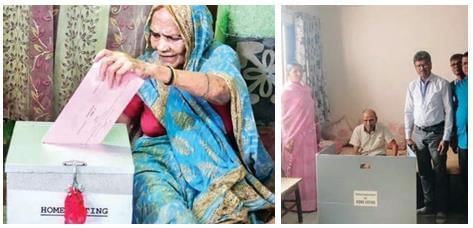
 (Suggestive Answer) Yes, I know of an elderly neighbour who was able to vote from home during the 2024 general elections using the postal voting option.

(c) How might they increase voter participation in your neighbourhood?
Ans: 
These measures can encourage more people, especially those with physical limitations or mobility issues, to vote by making the process easier and more accessible.

(d) How can technology assist?
Ans: 
Technology can assist by providing braille-enabled voter cards, mobile apps to request assistance, and ensuring polling stations are equipped with tools like ramps and support for the disabled. This helps remove barriers and enables more inclusive participation.

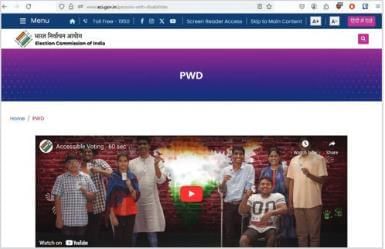
Q4: If you have access to the internet, visit the ECI website (https:// www.eci.gov.in/persons- -with-disabilities.) Read and identify the various interventions that the ECI has taken to facilitate voting by people with disabilities.
Let’s Explore

Ans: The Election Commission of India is dedicated to making voting accessible for persons with disabilities (PwDs). PwD voters are registered under four categories: visual impairment, speech and hearing disability, locomotor disability, and others. They can register online, at service centres, or via the Saksham app. 
Key initiatives to assist PwDs include:

  • Mapping PwDs polling station-wise for better support
  • Ensuring polling stations are on the ground floor.
  • Providing PwD-friendly facilities and separate queues.
  • Offering optional home voting.
  • Issuing voter ID cards and slips in Braille.
  • Adding Braille features to voting machines.
  • Providing wheelchairs, ramps, and free pick-and-drop transport.

Page No. 123

Let's Explore

Q5: (a) About 34 per cent of eligible voters did not exercise their right to vote in the 2024 elections. Why do you think this is so?
Ans:
 The 34 per cent of eligible voters who did not vote may have faced voter apathy due to a lack of awareness, disinterest in politics, or the belief that their vote would not make a difference. Additionally, practical difficulties such as long distances to polling stations, health issues, or lack of proper ID may have also prevented them from voting.

(b) What are some challenges people face in exercising their rights?
Ans: Some challenges that people face in exercising their rights are:

  • Physical disabilities or old age.
  • Inaccessible polling stations.
  • Lack of Voter ID or registration issues.
  • Low awareness about voting procedures.
  • Poor transportation in remote areas.
  • Work or family commitments on voting day.

(c) Design and conduct a short survey among adults in your family and neighbourhood to answer these questions. Analyse the data and write a report with suggestions on how it may be possible to ensure everyone votes.
Ans: 
The survey showed that many adults could not vote due to transport problems, long queues, and lack of proper information about candidates. To improve participation, mobile polling booths can be set up in remote areas, and awareness drives can educate people about the importance of voting. Extending voting hours, improving transport facilities, and ensuring ramps and wheelchairs at polling stations can help more people, including the elderly and disabled, cast their votes easily.

participation also means losing the chance to influence the outcome, which might lead to dissatisfaction with the elected representative later.

Don’t Miss Out

Q1: Imagine if a student did not want to vote for any of the candidates  Ahmed, Gurmat, or Ravi. What option would they?
Ans: 
If a student did not want to vote for any of the candidates  Ahmed, Gurmat, or Ravi  they would have the option to choose NOTA (None Of The Above).

Page No. 128

Let's Explore

Q13: Identify teachers in your school or vicinity who may have performed election duty. Invite them to your class to share their experiences.
Ans:
 (Suggestive Answer) We invited two teachers, Mrs. Sunita Sharma and Mr. Rajesh Kumar, who served on election duty during the 2024 general elections. Mrs. Sharma shared her experience at a rural polling booth, where she learned to use EVMs and VVPATs and faced challenges reaching remote areas. Mr. Kumar worked at a city booth and spoke about helping elderly and disabled voters with ramps and Braille slips. Both said the duty was tiring but gave them pride in serving democracy. Their stories helped us understand how carefully and fairly elections are conducted in India.

Page No. 131
Page No. 131

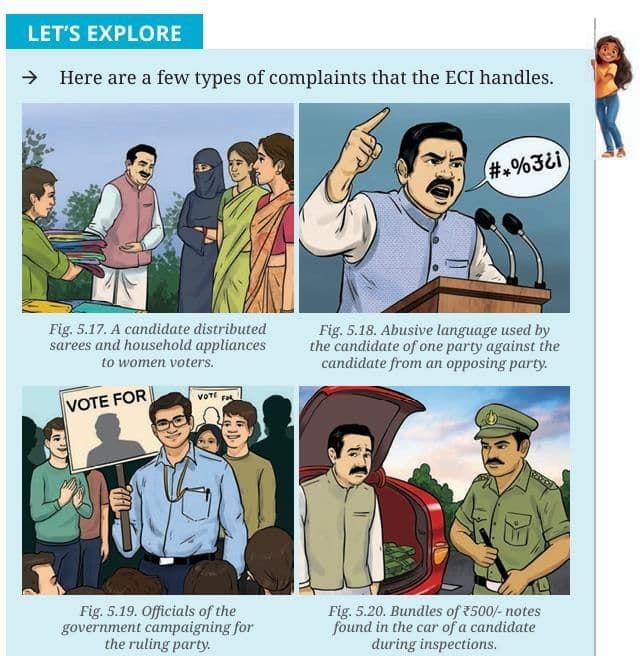
Q14: Why do you think these might be violations of the code of conduct?
Ans: These actions are violations of the Model Code of Conduct because:

  • Sarees distributed: Giving gifts or freebies to voters is considered bribery, which is unfair and influences voters’ choices.
  • Abusive language against another candidate: Using foul or disrespectful language goes against the principle of respectful campaigning and can incite hatred or violence.
  • Government officials working for ruling party candidate: Government officers must remain neutral during elections. Their involvement supports unfair advantage and undermines free and fair elections.
  • 500 bundles found in car: Carrying large sums of unaccounted cash during elections suggests an attempt to buy votes, which is illegal and unethical.

These practices go against the spirit of fairness, transparency, and equality that elections must follow in a democracy.

Page No. 132

Let's Explore

Q15: When is the next election in the region where you are located? Is it to the state, urban local body or panchayat?
Ans:
 (Suggestive Answer) In my region i.e., Delhi, the next election will be held to Municipal Corporation of Delhi in 2027. This will be an urban local body election.

Page No. 133

Don't Miss Out

Q2: The legislative assembly is called by several names in regional languages, for example, Vidhan Sabha and Niyama Sabha. What is it called in your state?
Ans: 
In my region, West Bengal, the legislative assembly is called the Vidhan Sabha.

Page No. 134

Let's Explore

Q16: Who are the MP and MLA / MLAs of the constituency you are located in? (A Lok Sabha constituency may have two or more assembly constituencies.)
Ans:
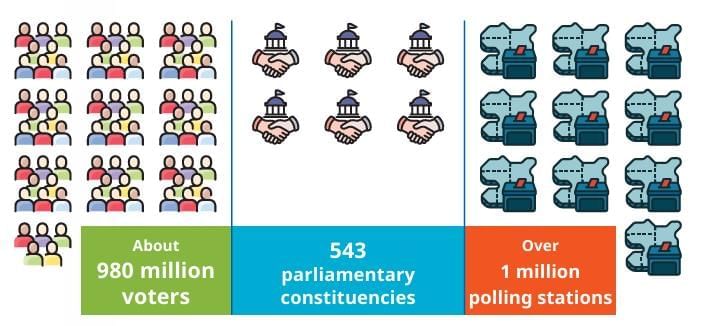
 (Students to rewrite answer after finding their local MLAs and MP.) In my area, which falls under the Gurugram Lok Sabha constituency in Haryana, our Member of Parliament (MP) is Rao Inderjit Singh from the Bharatiya Janata Party (BJP), elected in the 2024 General Elections. This constituency has nine assembly segments. Some key MLAs (2024) are Mukesh Sharma from Gurgaon, Rao Narbir Singh from Badshahpur, Bimla Chaudhary from Pataudi (SC), and Tejpal Tanwar from Sohna.A few numbers showing the scale of the 2024 Lok Sabha elections.A few numbers showing the scale of the 2024 Lok Sabha elections.
Q17: Which party does each of them belong to?
Ans: 
All the representatives from the Gurugram Lok Sabha constituency belong to the Bharatiya Janata Party (BJP). This includes Rao Inderjit Singh, the MP, as well as the MLAs from GurgaonBadshahpurPataudi (SC), and Sohna assembly segments. Thus, both at the national and state levels, the constituency is represented by the BJP.

Q18: What are the concerns of the MP and MLA, respectively?
Ans: 
The concerns of an MP and MLAs differ in scope. An MP focuses on national issues, such as passing laws, representing the region in Parliament, and addressing broader topics like infrastructure, economic growth, and national policies. MLAs, however, concentrate on local matters like improving roads, water supply, healthcare, education, and ensuring that state policies benefit their communities. While the MP deals with national governance, MLAs focus on the development and needs of their constituencies.

Page No. 136

Think About It

Q: Why do you think the I above group of people is not involved in electing the President of India? Why are the common people not involved in the election of the president?
Ans: 
The above group is not involved in electing the President because they are not directly chosen by the people. Nominated members are selected for their knowledge or experience, not through elections. Only directly elected representatives, such as MPs and MLAs, vote to choose the President, ensuring the process reflects the people’s will. Common people do not vote directly because the President’s role is mainly constitutional and symbolic. The Electoral College system ensures that the President has balanced support from both the central and state governments.

Page No. 138

Questions and Activities

Q1: Why is the universal adult franchise important for a healthy democracy?
Ans: Universal adult franchise (UAF) means that every adult citizen has the right to vote, regardless of caste, gender, religion or wealth. It is important for a healthy democracy because it ensures equal participation, represents all sections of the society and holds leaders accountable to the people.

Q2: What is the meaning of ‘secret ballot’? Why is this important in a democracy?
Ans: A secret ballot means voting in private so that no one knows who a person has voted for. It is important in democracy as it protects voters from pressure or threats and ensures free and fair elections by allowing people to vote without fear or influence.

Q3: Give examples of direct and indirect elections.
Ans:  In a direct election, citizens vote directly for the candidates they wish to elect. For example, elections to the Lok Sabha, State Legislative Assemblies, Gram Panchayats, and Municipal Corporations are all direct elections. Here, the voters choose their representatives themselves through universal adult franchise.
In contrast, an indirect election is when elected representatives vote to choose a leader or representative. Examples of indirect elections in India include the election of the President, Vice President, and members of the Rajya Sabha. In these cases, Members of Parliament (MPs) or Members of Legislative Assemblies (MLAs) cast votes on behalf of the people.

Q4: How is the election of members to the Lok Sabha different from that to the Rajya Sabha?
Ans: Members of the Lok Sabha are elected through direct elections. All citizens aged 18 and above vote directly for their representatives in their constituencies. The candidate with the most votes becomes a Member of Parliament (MP). On the other hand, Rajya Sabha members are chosen through indirect elections. They are elected by the MLAs (Members of State Legislative Assemblies), not by the public. Some members are also nominated by the President for their special contributions to society.

Q5: What, in your view, are the advantages of the EVM over paper ballots?
Ans: Advantages of EVM (Electronic Voting Machine) over ballot papers are:

  • Faster Counting: Results can be declared quickly as votes are counted electronically.
  • Cost-effective: Saves money on printing and transporting ballot papers.
  • Reusable: EVMs can be used many times after proper calibration.
  • Reduces Errors: Minimises human mistakes during counting.
  • Eco-friendly: Saves paper and helps protect trees.
  • Prevents Fraud: Reduces chances of invalid, duplicate, or tampered votes.
Q6: Voter turnout has been declining in some urban areas of India. What could be the reasons for this trend, and what steps can be taken to encourage more people to vote?
Ans: In many cities, voter turnout is falling due to busy lifestyles, lack of awareness, and a feeling that one vote does not matter. Some people also lose interest because of disappointment with political candidates or long queues at polling booths.
To improve participation, awareness campaigns should be organised to highlight the importance of voting. Online voter registration, easy access to polling booths, and special drives to involve youth can also help. Greater transparency and trust in the election process will further motivate people to vote responsibly.

Q7: Why do you think a proportion of seats in the Lok Sabha is reserved for the Scheduled Castes and the Scheduled Tribes? Write a short note.
Ans: A proportion of seats in the Lok Sabha is reserved for Scheduled Castes and Scheduled Tribes to ensure their adequate representation in Parliament. These communities have faced historical discrimination and social disadvantage, which limited their participation in politics. Reservation helps give them a voice in the law-making process, promotes equality, and supports their inclusion in the democratic system.

Q8: Social media is changing the way we experience elections — from catchy campaign reels and live speeches to political debates on Instagram and Twitter. But is this strengthening democracy or confusing it? Discuss in pairs: What are the benefits, what are the challenges, and what might the future of elections be in a digital age?
Ans: Benefits:

  • Social media helps political messages reach a wide audience quickly and at low cost.
  • It increases youth participation and encourages open discussion on public issues.
  • Leaders can communicate directly with people, improving transparency and accountability.

Challenges of Social Media in Elections and Democracy are:

  • Misinformation and Fake News: False information can spread quickly, influencing voters based on lies or half¬truths.
  • Trolling and Harassment: Online discussions can become toxic, deterring meaningful engagement.
  • Manipulation: Interference of groups with vested interests or automated accounts can sway public opinion and spread propaganda.

Future of Elections in Digital Age:

  • Online Voting: Elections might become more digital, offering secure online voting to increase turnout.
  • AI and Data Analytics: Campaigns may rely more on data to target voters with personalised messages.
  • Greater Regulation: There may be stronger rules to manage political ads, misinformation, and digital campaigning.
  • Hybrid Campaigning: A mix of digital and traditional methods will likely shape future elections, blending technology with grassroots methods.
Q9: Visit the website https://www.indiavotes.com, and choose a parliamentary constituency election from any year and explore its results. Do the same for an assembly election in your state.
Ans: I visited www.indiavotes.com and explored election results from both a parliamentary and a state assembly constituency. For the parliamentary election, I reviewed the Bolangir Lok Sabha constituency in Odisha during the 2024 general elections. In this election,
Sangeeta Kumari Singh Deo of the BJP won by a margin of over one lakh votes, defeating Surendra Singh Bhoi of the BJD. For the state assembly election, I looked at the Bhabanipur constituency in the 2021 West Bengal Assembly elections. In this election, Mamata Banerjee of the Trinamool Congress (TMC) secured a strong victory against Priyanka Tibrewal of the BJP, reaffirming her position as the Chief Minister. These examples highlight how Indian citizens take part in both national and state-level elections through direct voting, helping shape the country’s democratic leadership.

Wednesday, January 7, 2026

NCERT Class 8 Social Science Chapter 4 The Colonial Era In India

Page No. 83

The Big Questions

Q1: What is colonialism?
Ans: Colonialism means one country ruling another to use its land, people, and resources for its own benefit. It often causes hardship for the people being ruled and changes their way of life.

Q2: What drew European powers to India?
Ans: Europeans came to India mainly for trade and profit. India was famous for spices, silk, cotton, and indigo, which were in great demand in Europe. They wanted to find direct sea routes to avoid Arab traders who charged high prices. Religious motives also played a role, as the Portuguese wanted to spread Christianity. Gradually, countries like Portugal, the Netherlands, France, and Britain competed to control Indian trade and power.

Q3: What was India’s economic and geopolitical standing before and during the colonial period?
Ans: 
Before the Colonial Era: India was made up of many kingdoms such as the Mughals, Marathas, Rajputs, and southern rulers. These kingdoms were rich in trade, art, and culture. India was famous for its gems, textiles, and spices, which attracted traders from Europe, Arabia, and Southeast Asia. Indian rulers made their own decisions, signed treaties, and spread Indian culture, religion, and knowledge to other parts of Asia.

During the Colonial Period: The British changed India’s economy to suit their needs. India was made to supply raw materials like cotton and indigo to Britain and to buy British goods. Local industries and crafts declined. The British controlled India’s defence, trade, and foreign affairs, and Indian soldiers were used to fight for British interests.

Q4: How did the British colonial domination of India impact the country?
Ans: 

  • The British drained India’s wealth and used its natural resources for their own profit.
  • Traditional Indian industries such as textiles and handicrafts were destroyed because cheap British goods flooded the markets.
  • Farmers suffered due to heavy land taxes under systems like the Permanent Settlement, which caused debt, poverty, and many famines.
  • India lost its political freedom as the British took control of administration, defence, and foreign affairs.
  • English education created a small educated class but ignored Indian knowledge, culture, and languages.
  • Railways, roads, and telegraph lines were built mainly to serve British trade and military needs.
  • Although these developments later helped in India’s unity and freedom movement, they were originally made to strengthen British control.
Page No. 87
Let’s Explore
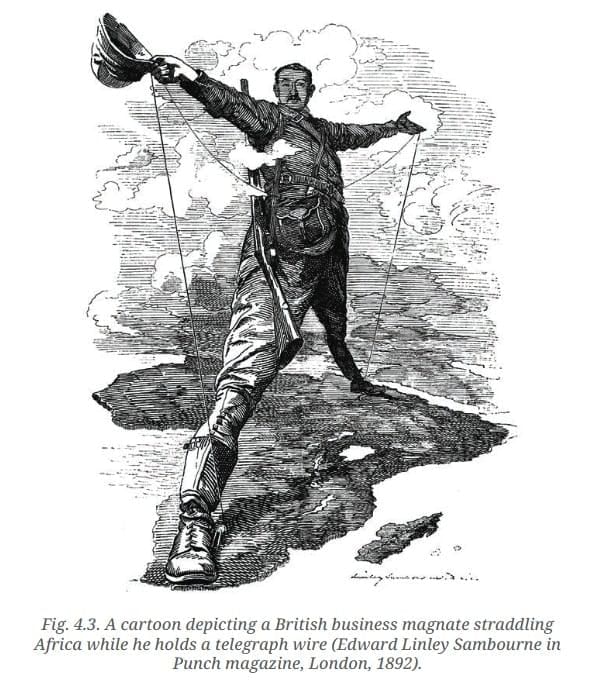
Q1: What do you think the cartoon (Fig. 4.3) is trying to express? (Keep in mind that the telegraph, which permitted instant communications for the first time, was then a recent invention.) Analyse different elements of the drawing.

Let’s Explore

Let’s ExploreAns:

Before the telegraph, messages took weeks or months to travel between countries.
The telegraph made communication very fast, and people were amazed that messages could now be sent “faster than the wind.”
The cartoon may show a person in London sending a message and someone in India receiving it instantly.
It shows how the telegraph connected far-away parts of the world and made the Earth seem smaller.
For the British, the telegraph helped them control their colonies easily by sending orders quickly from London to India.

Page No. 92

Let us Explore

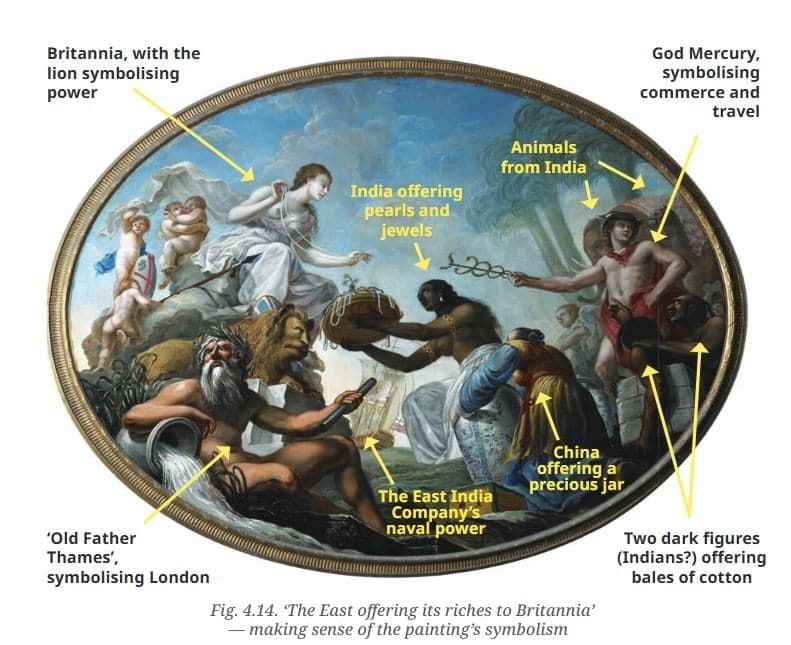
Q1: Before you read further, have a good look at the painting on the first page of this chapter. It was specially ordered for the London headquarters of the East India Company and is over three metres long. Observe every aspect of it the people in it, the objects, the symbols and the attitudes. Form groups of four or five students and let each group present its conclusions as regards the messages the painting conveys. (You will find our answers a few pages down, when we return to the painting, but avoid looking at them right now!)
Ans: 

  • The painting shows Britain as powerful and supreme. At the top, a white woman named Britannia is seated like a goddess, symbolising Britain’s strength and control.
  • India is shown offering its wealth. Dark-skinned figures, representing Indians, are bowing and giving pearls, jewels, and cotton to the British.
  • A figure from China is also seen offering gifts, showing that other countries too were giving their wealth to Britain.
  • Exotic animals and trade symbols are shown to represent India’s riches and Britain’s global trade power.
  • A man with a trident symbolises the British navy, which controlled the seas and trade routes.
  • Another figure, called Old Father Thames, represents the River Thames in London, showing that all wealth was flowing to Britain.

Conclusion: The painting clearly shows that Britain, through the East India Company, ruled over India and other colonies and took their riches to make itself powerful.

Page No. 98

Let's Explore

Q1: Why do you think Dadabhai Naoroji means by ‘un-British rule in India’? (Hint: he was an MP in the House of Commons in 1892.)
Ans:
 Dadabhai Naoroji used the phrase “Un- British Rule in India” to highlight how British colonial governance violated the very principles of justice, fairness, and liberalism that Britain claim to up hold. He argued that while British rule appeared civil and progressive on the surface, it was fundamentally exploitative and unjust in practice. As a British MP, he believed the British were not treating Indians with the same respect or rights given to people in Britain.

Think About It

Q2: Let us return to this painting (Fig. 4.14), but now with some clues to its symbolism. Note how Britannia (a symbolic figure for Britain) sits higher than the colonies, pointing to her superior power; contrast with the lower position and bent posture of the colonies. Did they really ‘offer’ their wealth? Or did Britain seize it by force or ruse? Note also the Indians’ dark complexion (in contrast with that of Britannia), reflecting the belief in the superiority of white people over the dark-skinned ‘natives’.
Think About It

Ans: No, Indians did not offer their wealth willingly. In most cases, Britain seized it by force, unfair laws, or oppression. The British used high taxes, unfair trade rules, and military power to take control of land, resources, and money. Indian farmers, artisans, and rulers often had no choice but to give up their wealth. So, it was not a gift it was taken through exploitation and control.

Page No. 100

Let's Explore

Q1: Do you understand all the terms used above to list and describe Indian textiles? If not, form groups of four or five and try to find out more, then compare your findings with the help of your teacher.
Ans: 
Here are some terms used to describe Indian textiles listed below with their simplest explanation:

  • Cotton: Cotton is a soft, fluffy fiber that grows around the seeds of cotton plant. It is used to make light and breathable clothes.
  • Silk: Silk is a fine and luxurious fabric that is commonly used to make saree, salwar suits, and kurtas, etc.
  • Wool: Wool is a soft, warm fiber taken from the fleece (hair) of animals like sheep, it is highly used during winters to make sweaters, shawls, mufflers, etc.
  • Jute: Jute is a rough yet very strong fiber; used to make sacks, ropes, carpets, and mats.
  • Hemp: Hemp is a very strong natural fiber. It is used to make bags and ropes.
  • Coir: Coir is a dried fiber taken from the outer husk of coconuts.
  • Muslin: Muslin is a fine cotton; famous in Dhaka (Bangladesh) was used for royal garments and now is used to make regular wear cotton clothes.
  • The northwestern border also included Baluchistan and the North-West Frontier Province, which are now in Pakistan.
  • Many cities have new names now — Calcutta is Kolkata, Bombay is Mumbai, and Madras is Chennai.
  • During British rule, regions were called Provinces, Agencies, or Native States, but today India is divided into states and union territories.
  • In the 1909 map, pink areas showed regions directly under British control, while yellow areas were princely states ruled by Indian kings under British supervision.
  • The map also showed railway lines built by the British to help in trade and control over India.

Page No. 102

Think About It

Q1: What exactly did Macaulay mean when he wrote that “a single shelf of a good European library was worth the whole native literature of India and Arabia”? And why should he want to make Indians “English in taste, in opinions, in morals, and in intellect”? How does this relate to the ‘civilising mission’ mentioned at the start of the chapter? Ask your teacher to guide a class debate on these questions.
Ans: 
Macaulay believed European books were superior to all Indian and Arabic books. This reveals his colonial mindset, which looked down on Indian culture and knowledge. He wanted Indians to adopt British ways of thinking, living, and believing so they would support British rule more easily. This attitude relates directly to the “civilising mission” where the British claimed to educate and improve Indians, but in reality, aimed to control and weaken Indian identity and culture.


Page No. 104

Think About It

Q1: What is meant by “the sun never sets on the British Empire”? Do you think this was a correct statement?
Ans:
 “The sun never sets on the British Empire” means the empire was so vast, with colonies across the world, that the sun was always shining on at least one of its lands. Yes, I think this was a true statement for that time, because Britain ruled over many countries across Asia, Africa, Europe, and the Americas.

Page No. 105

Let's Explore

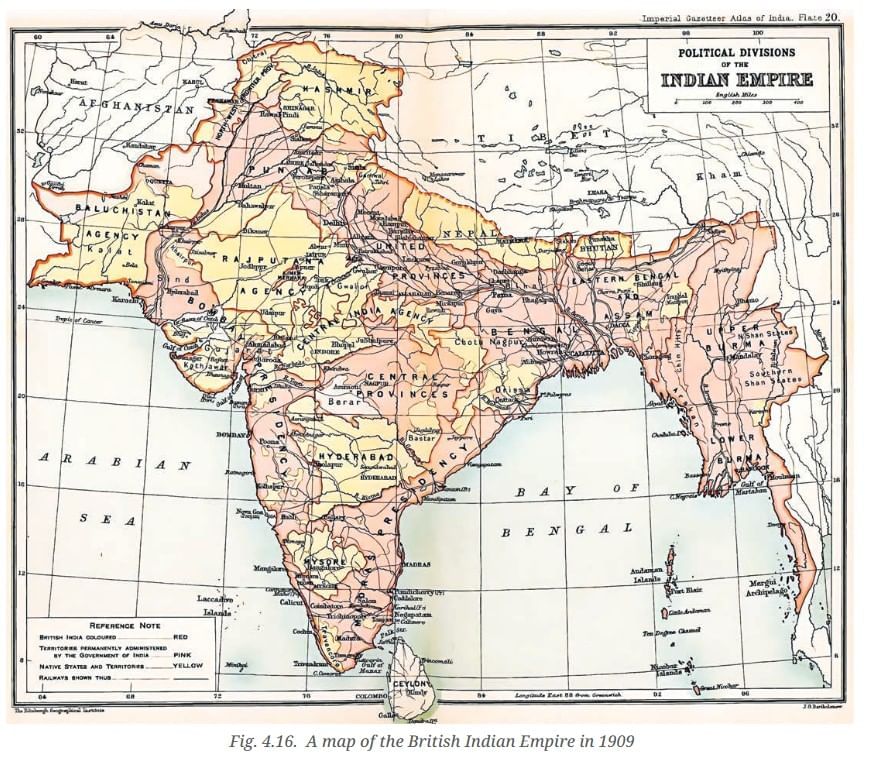
Q1: Examine the map. What are the main differences with the map of today’s India, in terms both of borders and of names?
Let`s ExploreAns:

  • The 1909 map of the Indian Empire was very different from the map of India today.
  • During British rule, India included the areas of Pakistan, Bangladesh, and Myanmar (Burma), which are now separate countries.
  • The northwestern border also included Baluchistan and the North-West Frontier Province, which are now in Pakistan.
  • Many cities have new names now — Calcutta is Kolkata, Bombay is Mumbai, and Madras is Chennai.
  • During British rule, regions were called Provinces, Agencies, or Native States, but today India is divided into states and union territories.
  • In the 1909 map, pink areas showed regions directly under British control, while yellow areas were princely states ruled by Indian kings under British supervision.
  • The map also showed railway lines built by the British to help in trade and control over India.

Page No. 107

Let's Explore

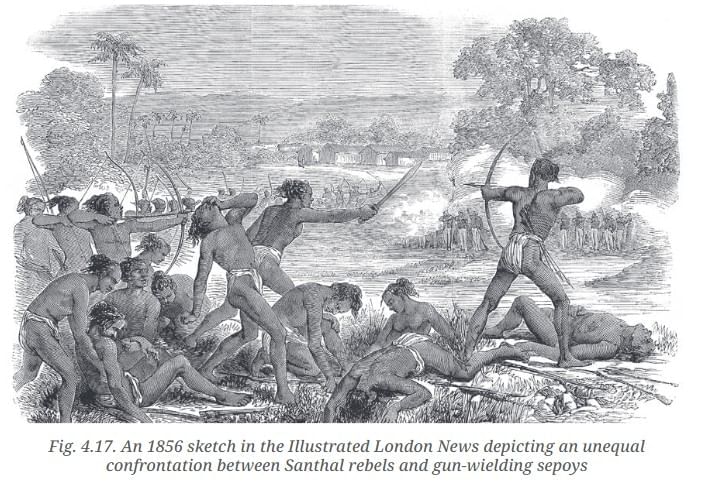
Q1: Note how the Santhals are depicted in the 1856 sketch (Fig. 4.17) drawn from an artist’s imagination: observe their complexion, dress, weapons and draw your conclusions as regards the image this depiction would create in the popular mind in Britain.

Let`s Explore

Ans: In this 1856 sketch, the Santhals are shown with dark skinned, minimal clothing, with traditional bows and arrows. They appear wild, primitive, and violent, fighting British soldiers with their handmade traditional weapons. This image, drawn from imagination, likely created a negative and fearful picture in the British public’s mind depicting the Santhals as uncivilized savages rather than people resisting injustice. It helped justify British rule as a “civilizing mission”, hiding the real reasons for tribal uprisings like exploitation and land loss.


Page No. 108

Let's Explore

Q1: Indigo is a natural deep blue pigment used in dyeing. Can you think of other natural substances that have been traditionally used in India to dye cloth?
Ans: 
India has used several natural substances that have been traditionally used in India to dye cloth such as Turmeric, Henna (Mehndi), Madder root, Pomegranate rind, Indigo, Neem leaves, Bark of trees, Lac insect resin etc. and these substances give various colours like yellow, reddish-brown, red, pink, greenish, gray, purple etc. These dyes were eco-friendly and used in traditional textile arts like Block Printing, Kalamkari, and Bandhani.

Q2: Why do you think was the term ‘Sepoy Mutiny’ rejected after Indian Independence? Write one paragraph explaining your reasons. 
Ans:
 The term ‘Sepoy Mutiny’ was rejected by historians after Indian Independence because it gives the false idea that only a few Indian soldiers rebelled for personal or military reasons. In reality, the Revolt of 1857 was a large and widespread uprising involving not just Indian soldiers, but also farmers, landlords, regional kings, and citizens from different parts of India. It was a united fight against British rule and oppression. Calling it just a “mutiny” hides its true national character and the freedom struggle it represented.

Page No. 112

Let's Explore

Q1: In the sentence “It opened (or re-opened) India to the world and the world to India”, why do you think we added ‘reopened’? 
Ans:
 The term “re-opened” is used because India was already connected to the world through trade, culture, and philosophy long before colonialism. India was a key player in the Silk Route and had established seaports and trade systems exporting spices, gems, cotton, indigo, and more. Buddhism and Hinduism spread widely across Asia before British arrival. Thus, the British did not open India to the world for the first time; they reconnected it to global systems through their colonial networks.

Q2: Some argue that stolen cultural heritage has been better preserved abroad than it would have been in India. What is your view on its repatriation? Discuss in groups.
Ans: 
Many people believe that the stolen art and cultural treasures of India should be returned to their homeland. These objects are part of our history, identity, and pride. Keeping them in foreign museums ignores the injustice of how they were taken. Today, India has the ability to preserve and display them properly in its own museums. If brought back, these treasures would inspire Indians and remind us of our rich cultural heritage instead of being kept far away in other countries.

Page No. 114

Questions and Activities

Q1: What is colonialism? Give three different definitions based on the chapter or your knowledge.
Ans: Colonialism means when a powerful country takes control over another country and uses its land, people, and resources for its own benefit. It affects the political, economic, and cultural life of the country being ruled.

Three definitions of colonialism are:

  1. Historical Definition: Colonialism is when a foreign power controls another land and uses its wealth for its own interests.
  2. Political Definition: Colonialism is the rule of one country over another, removing local rulers and freedom.
  3. Economic and Social Definition: Colonialism is when a strong nation exploits the economy and people of a weaker country and forces its own language, education, and culture on them.

Q2: Colonial rulers often claimed that their mission was to ‘civilise’ the people they ruled. Based on the evidence in this chapter, do you think this was true in the case of India? Why or why not?
Ans: No, the British claim of “civilising” India was not true. They said they came to improve India through modern education, law, and railways, but their real aim was to gain political control and economic benefit.

Evidence from the chapter shows:

  • Economic exploitation: India’s raw materials like cotton and indigo were taken to support British industries, while Indian crafts and textile industries were destroyed.
  • High taxes and famines: Heavy land taxes made farmers poor, and during famines the British kept collecting revenue instead of giving help.
  • Loss of Indian rule: Many Indian rulers were defeated or forced into unfair treaties.
  • Biased education: English education was promoted to create Indians who thought like the British.

Thus, the so-called “civilising mission” was only a way to justify exploitation and British domination in India.

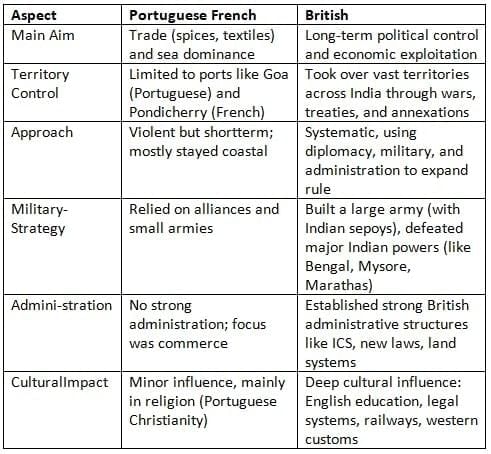
Q3: How was the British approach to colonising India different from earlier European powers like the Portuguese or the French?
Ans: The British approach to colonising India was more systematic, organised, and long-lasting compared to the earlier European powers like the Portuguese and the French, who were mainly focused on trade and coastal control. 

Key Differences:

Questions and Activities

The British went beyond trading they built an empire, interfered in Indian politics, introduced new systems, and completely reshaped India’s economy and society. In contrast, the Portuguese and French were mainly commercial powers with limited political ambitions and smaller territorial countries.

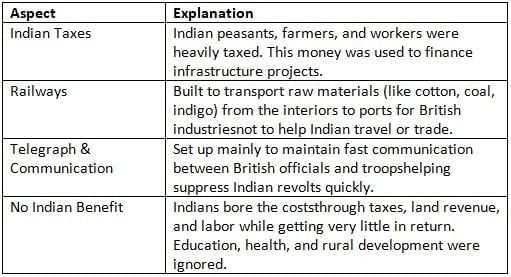
Q4: “Indians funded their subjugation.” What does this mean in the context of British infrastructure projects in India like the railway and telegraph networks?
Ans: During colonial rule, the British introduced major infrastructure projects such as the railway, telegraph, and postal networks. While these appeared modern and progressive, their main purpose was to serve British interests, not the welfare of Indians.

How Indians ‘Funded their own subjugation’:

Questions and ActivitiesConclusion: The infrastructure may have modernized India physically, but it was funded by Indians to strengthen British economic and military control. So, Indians unknowingly paid in the form of heavy taxes and natural resources in India, for the very tools used to dominate and exploit them.
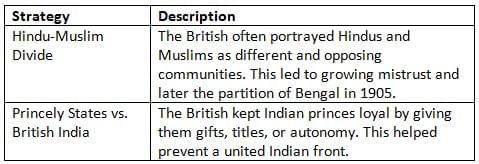
Q5: What does the phrase ‘divide and rule’ mean? Give examples of how this was used by the British in India?
Ans: “Divide and Rule” refers to a strategy used by the British to maintain their control over India by creating or deepening divisions among Indians especially on the basis of religion, caste, region, and class so that Indians would not unite against British rule.

Examples of “Divide and Rule” Policy in India:

Questions and ActivitiesConclusion: The British mastered the art of “Divide and Rule”, using religious, social, and political differences among Indians to keep them weak and disunited making it easier for a small foreign power to rule a vast country.
Q6: Choose one area of Indian life, such as agriculture, education, trade, or village life. How was it affected by colonial rule? Can you find any signs of those changes still with us today? Express your ideas through a short essay, a poem, a drawing, or a painting.
Ans: Colonialism and Indian Agriculture: Under British rule, Indian agriculture changed completely, but not for the benefit of farmers. The British forced farmers to grow cash crops like indigo, cotton, and opium, which were needed by British industries instead of food crops for Indians. The Permanent Settlement of 1793 made zamindars collect land taxes, which caused the exploitation of peasants and led to poverty and debt. Many farmers suffered during frequent famines, while grains were exported to Britain. Railways were built mainly to carry raw materials to ports, not to help farmers. Even today, problems like farmer debts, unequal land ownership, and focus on cash crops can be traced back to colonial agricultural policies.

Q7: Imagine you are a reporter in 1857. Write a brief news report on Rani Lakshmibai’s resistance at Jhansi. Include a timeline or storyboard showing how the rebellion began, spread, and ended, highlighting key events and leaders.
Ans:  
The Jhansi Flame: Rani Lakshmibai’s Heroic Resistance!
Date: June 1858
Reporter: Vansh Mishra The Hindustan Herald
Rani Lakshmibai, the brave queen of Jhansi, became a symbol of courage during the Revolt of 1857. When the British tried to take over Jhansi under the Doctrine of Lapse, denying her adopted son Damodar Rao the throne, she refused to give up and declared, “I shall not surrender my Jhansi!”
She led her soldiers, including women, with great bravery against the British. After fierce battles, Jhansi was captured in April 1858, but Rani escaped and joined Tatya Tope at Gwalior. She fought her final battle fearlessly and was martyred on 17 June 1858. Her leadership and sacrifice continue to inspire Indians even today.
Timeline / Storyboard: Rani Lakshmibai and the 1857 Revolt

  • 1853: After the death of Raja Gangadhar Rao, the British annexed Jhansi under the Doctrine of Lapse. Rani Lakshmibai protested against this unfair decision but her appeal was ignored.

  • May 1857: The great Revolt of 1857 began in Meerut and soon spread to many parts of North India. Inspired by this uprising, Rani Lakshmibai decided to protect her kingdom from British rule.

  • June 1857: The people and soldiers of Jhansi joined the rebellion. Rani Lakshmibai took command of her army and began preparing to defend her state with courage and determination.

  • March 1858: The British army, led by Sir Hugh Rose, attacked Jhansi. Rani Lakshmibai fought bravely and organised a strong defence, inspiring even women to join the battle.

  • April 1858: After days of heavy fighting, Jhansi was captured by the British. However, Rani Lakshmibai escaped with her loyal soldiers and continued the struggle.

  • June 1858: She joined forces with Tatya Tope at Gwalior and fought her final battle against the British. On 17 June 1858, Rani Lakshmibai was martyred while fighting bravely for her country’s freedom.

Q8: Imagine an alternate history where India was never colonised by European powers. Write a short story of about 300 words exploring how India might have developed on its path.
Ans: 
Title: The Lotus Never Wilted

In an alternate history, the European powers never reached India. The country continued to grow under strong kingdoms like the Marathas, Rajputs, Mysore, and the Sikhs, who later formed a Bharatiya Sabha to promote peace, trade, and cooperation. India developed its own industries in textiles, metalwork, and shipbuilding through trade with countries like Japan and China.

Great universities such as Takshashila and Nalanda were rebuilt, where ancient learning was combined with modern science. Indian languages, art, and culture flourished freely without foreign control.

By 1900, India became a global centre for knowledge, science, and Ayurveda. The caste system grew weaker as reformers promoted equality and education for all. In 1947, India proudly led the World Congress of Civilizations, showing unity and progress. The tricolour flag symbolised not freedom from rule, but India’s strength, diversity, and self-reliance. The lotus of India bloomed peacefully, untouched by foreign rule.


Q9: Role-play: Enact a historical discussion between a British official and an Indian personality like Dadabhai Naoroji on the British colonial rule in India.
Ans: A Historical Role-Play Dialogue:

Setting: London, late 1890s — after a debate in the British Parliament.

British Official: Mr. Naoroji, your “Drain of Wealth” idea seems exaggerated. The British have built railways, schools, and laws in India. Don’t you think these are benefits?

Dadabhai Naoroji: Sir, I agree that railways and schools were built, but they were made with Indian money and for British use. India’s wealth is being drained to Britain through unfair trade and taxes.

British Official: But India is part of the Empire. These developments would not have happened without British rule.

Naoroji: Progress cannot come from exploitation. Railways were built to take raw materials to British factories, not to help Indians. Our industries are destroyed, and people suffer from poverty and famine.

British Official: That is how empires work, Mr. Naoroji.

Naoroji: Then let justice begin with self-rule. India is capable of governing itself. We want fairness, dignity, and freedom — not charity.

Q10: Explore a local resistance movement (tribal, peasant, or princely) from your state or region during the colonial period. Prepare a report or poster describing:

  • What was the specific trigger, if any?
  • Who led the movement?
  • What were their demands?
  • How did the British respond?
  • How is this event remembered today (e.g., local festivals, songs, monuments)?

Ans: 
Report: The Santhal Rebellion (1855-56)
Region: Present-day Jharkhand (then part of Bengal Presidency)
Tribal Group: Santhals

Trigger:
The Santhals were badly exploited by zamindars, moneylenders, and British officials. Heavy taxes, loss of land, and constant debt forced them into poverty and suffering.

Beginning of the Revolt:
In June 1855, in the village of Bhognadih, leaders Sidhu and Kanhu Murmu, along with their brothers Chand and Bhairav, raised the flag of revolt. Over 60,000 Santhals joined them, declaring they would not pay taxes or follow British laws.

Demands and Actions:
They demanded an end to zamindari oppression, return of tribal land, and justice for their people. The rebels attacked British offices and moneylenders using bows, arrows, and traditional weapons.

British Response:
The British crushed the rebellion with brutal force. Thousands were killed, and the leaders were captured and executed.

Legacy:
The Santhal Rebellion became the first major tribal uprising against British rule. June 30 is celebrated as Hul Diwas (Day of Revolt). Statues of Sidhu and Kanhu Murmu stand in Dumka and Ranchi, and the Santhal Hul Museum keeps their memory alive.


Monday, November 24, 2025

NCERT Class 8 Social Science Chapter 3 The Rise of Marathas

NCERT Class 8 Social Science 
Chapter 3 The Rise of Marathas

Q1: Who were the Marathas? How did they manage to become the largest pan-Indian power before the British took over?
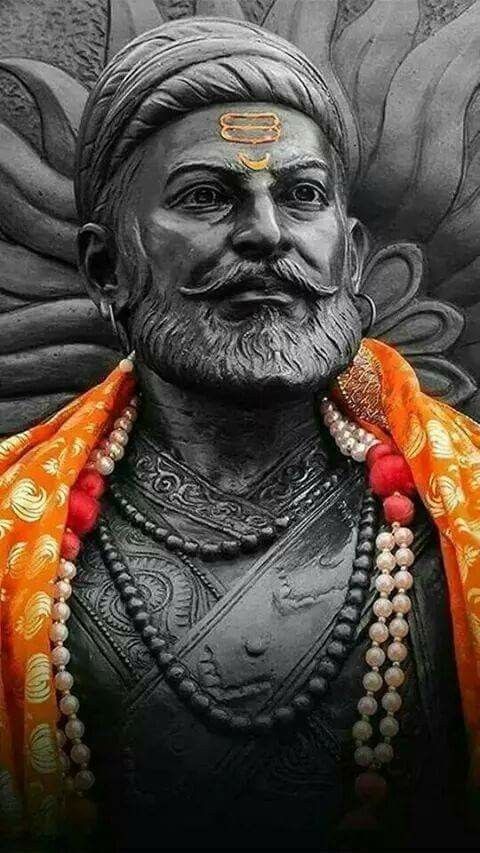
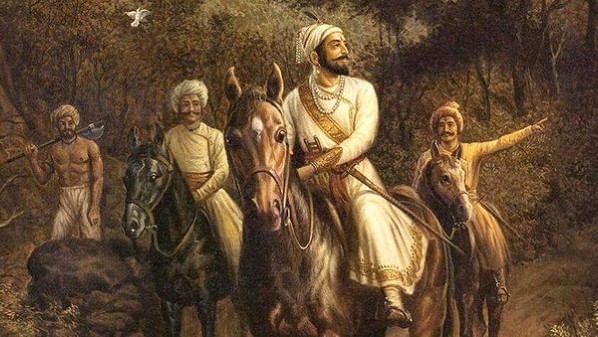
Ans: The Marathas were brave and powerful people from Maharashtra in the Deccan region. They spoke Marathi and followed Hindu traditions. With leaders like Shivaji, they built a strong empire, fought against the Mughals, protected Indian culture, and ruled large parts of India before British rule. Later, they even fought three wars with the British and were the last strong Indian rulers before British dominance began. Maratha rulers worked for the public welfare, patronised art and culture, were religiously tolerant, and never oppressed their people.  In short, the Marathas became the largest Indian power before the British, ruling vast territories across India.
Q2: What were some features of their governance?
Ans: Shivaji introduced a well-organised and just administration. He formed a council of eight ministers called the Ashta Pradhan Mandala. Officials were paid salaries instead of land grants, and many were transferred regularly to prevent misuse of power. Soldiers’ families were cared for through pensions. The Marathas also collected chauth and sardeshmukhi taxes from neighbouring provinces while ensuring peace and protection.
Q3: What impact did the Maratha Empire leave in Indian history?
Ans: The Marathas played a crucial role in Indian history. They stopped the Mughals from fully controlling India and built a strong empire. Shivaji promoted good governance, protected people, and respected all religions. They inspired later freedom ideals and revived Indian confidence. Spreading across India, the Marathas shaped regional politics and stood firm against colonial powers, leaving a legacy of loyalty, patriotism, and decentralised governance that continues to influence India’s political landscape today.

Q1: Have you ever heard the term ‘bhakti’? What does it mean to you? Choose a bhakti saint from any part of India and learn about their life, their teachings, and the message they shared. You can also find one of their poems or bhajans and share it with your classmates. 
Ans: Yes, I have heard of the term ‘bhakti’. For me, it means having a deep belief in and respect for God. Mirabai is a famous bhakti saint from Rajasthan. She had deep faith in Lord Krishna. She left her luxurious life and devoted herself to singing and worshipping Lord Krishna. Her bhajans are very inspirational, teaching how to build firm faith in God and love Him wholeheartedly. One of Mirabai’s famous bhajans is “Upayoji maine Ram ratan dhan payo”, which means “I have received the precious jewel of God’s name; these treasures are beyond all worldly wealth, and I hold them with great joy and love.”

Q1: If you could time-travel and meet Shivaji, what three questions would you ask him and why?
Ans: If I could time-travel and meet Shivaji, I would ask him the following three questions:

  1. How did you win so many battles with fewer soldiers compared to your enemies? What were your secrets? This would help me understand his ideas of strategy and unity.
  2. What encouraged you to practise such a high level of religious tolerance? This would help me understand his ideas of unity and tolerance.
  3. When and where did you conceive the idea of Swarajya? What inspired you to fight for it? This would help me learn more about his vision and motivation.

Q1: Try to find out more about guerrilla warfare. Which other countries in the world adopted this method? What geographical advantages did they utilise for this? Discuss your findings in groups.
Ans: Guerrilla warfare is a famous ancient fighting tactic used to defeat more powerful enemies. In this warfare, soldiers divide into small groups, use surprise attacks, set traps, and move quickly during battles. Countries such as Afghanistan, Vietnam, and Cuba used this method. Soldiers utilised thick forests, mountains, rugged hills, and caves to gain an advantage over their enemies.

Q1: Pick an event from Shivaji’s life and, with your classmates, stage it as a play.
Ans: (Suggestive Answer)
Title: The Killing of Afzal Khan
Scene: Afzal Khan planned to kill Shivaji with a hidden weapon during a meeting at the foot of Pratapgarh Fort in Maharashtra.

  • Afzal Khan: (hugging Shivaji) “Come, Shivaji, let’s be friends.”
  • Shivaji: (pulls out his wagh nakh and shouts) “You betrayed me!” (They fight. Shivaji wins.)
  • Narrator: Shivaji’s courage and planning saved him and defeated a great threat.

Q1: Shivaji issued strict instructions to his officials not to mistreat the subjects or to forcefully grab even a blade of grass from them. In one of the letters issued to his officials, Shivaji says:
Ans: “Wood from big trees like teak is required for the Navy. If needed, secure permission for cutting the trees from the forest and then proceed. Other trees like mango and jackfruit are also useful, but do not touch them, because such trees take many years to mature, and the people care for them like their children. If you cut them, will their sorrow ever end? If you accomplish something by oppressing others, it perishes soon, along with the oppressor. There is harm in the absence of such trees as well. Therefore, do not use force under any circumstances.”
Q2: Based on Shivaji’s letter, what can you tell about his values as a ruler?
Ans: Based on the letter, Shivaji upheld values like compassion, justice, and environmental responsibility. He took accountability for his people and always protected them. He emphasised ethical governance, avoided oppression, and valued the emotions of his subjects. He promoted humanity, religious tolerance, and principled leadership. The letter also demonstrates his respect for nature, art, and literature.

Q1: Have you heard of the dance form ‘Bharatanatyam’? Did you know that this dance form has a deep connection with the Marathas? Can you find out what this connection was?
Ans: Yes, I have heard of Bharatanatyam. It is a very famous classical dance of Tamil Nadu. When the Maratha rulers governed Thanjavur in South India, they supported and promoted Bharatanatyam, forming a deep connection with it. The Maratha emperors built temples to help dancers grow and preserved the art form.

Q1. Analyse how geography (particularly mountains and coastlines) influenced Maratha military strategy and state formation.
Ans: The Marathas lived in the Western Ghats and near India’s west coast. Mountains helped them build strong forts and secret paths for surprise attacks. The coastline allowed them to develop a navy to protect maritime trade. These natural features made their military strong and advanced.
Q2: Imagine you are creating a short biography of a Maratha leader for younger students. Choose one personality (Kanhoji Angre, Bajirao I, Mahadji Shinde, Ahilyabai Holkar, or Tarabai) and write 3-4 paragraphs highlighting what makes them inspirational. Include at least one challenge they overcame.
Ans: Kanhoji Angre – The Maratha Sea Lion
Kanhoji Angre, known as the “Maratha Sea Lion,” was the chief of the Maratha Navy in the 18th century. He defeated powerful British and Portuguese fleets using clever tactics and knowledge of the western coast. Though his ships were smaller, his courage and strategy protected Indian trade from foreign control. He built strong sea forts like Vijaydurg and became India’s first great naval hero.
Q3: If you could visit one Maratha fort today (such as Raigad, Sindhudurg, Gingee, or Pratapgarh), which would you choose and why? Research its history, architecture, and strategic importance. Present your findings as a digital presentation or a poster in class.
Ans: (Suggestive Answer)
If I could visit one Maratha fort, I would choose Raigad Fort. Raigad was the capital of Chhatrapati Shivaji’s empire. It is located on a high hill in Maharashtra, surrounded by deep valleys, which made it very safe from enemies. Shivaji was crowned king here in 1674, making this fort very special.
The fort has strong stone walls, big entry gates, secret paths, and beautiful buildings like the Queen’s palace, Shivaji’s throne, and market area. There are 1,737 steps to reach the top, or you can take a ropeway. From the top, you can see beautiful views of the mountains all around. This fort is important in history because it was the heart of the Maratha empire, and Shivaji ruled from here with justice and bravery. Visiting Raigad Fort would help me learn more about our history and Shivaji’s great leadership.
Q4: The chapter states, “The British took India from the Marathas more than from the Mughals or any other power.” What do you think this means? What evidence from the chapter supports this idea?
Ans: This means that when the British wanted to rule India, the Marathas were the main power, not the Mughals. The Mughal Empire was already weak, while the Marathas controlled most of India, including Delhi, Gujarat, and Malwa.
The Marathas fought three wars with the British and were the last strong Indian rulers before British rule began. Hence, to control India, the British had to defeat the Marathas, which shows how powerful the Marathas had become.
Q5: Compare how Shivaji and later Marathas treated religious places and people of different faiths. What evidence from the chapter shows their approach to religious diversity?
Ans: Shivaji and the later Marathas had religious tolerance and treated people of all faiths with great respect and equality. Shivaji was a devout Hindu, but he never attacked mosques or hurt people of other religions. When he sacked Surat, he spared religious places and even protected the house of a kind man. He also had Muslim soldiers and officers in his army. Later, under the Thanjavur Marathas, a Muslim poet named Ambar Husain was allowed to write about the Bhagavad Gita, which shows religious harmony. This proves that the Marathas believed in respecting all religions and living together peacefully.
Q6: The chapter describes how forts were ‘the core of the state’ for Marathas. Why were they so important? How did they help the Marathas survive against larger enemies?
Ans: Forts were very important for the Marathas because they gave them safety and control. The forts were built on high hills and had strong walls, which made it hard for enemies to capture them. When big armies like the Mughals attacked, the Marathas hid in forts, planned their next move, and used guerrilla warfare. From the forts, they could watch the roads, store food and weapons, and protect their people. That’s why forts were called the “core of the state” — they helped the Marathas stay strong and fight back, even against larger and more powerful enemies.
Q7: You have been appointed as the chief designer for Maratha coins. Design a coin that represents Maratha achievements and values. Explain the symbols you chose.
Ans: If I design a Maratha coin, it will show the greatness and values of the Marathas. On one side, I will draw Shivaji’s face with a sword and a fort behind him. This shows his bravery and how he protected the kingdom using forts. I will also add the saffron flag, which stands for Hindu culture and unity.
On the other side, I will write in Sanskrit as Shivaji’s royal seal. Around the edge, I will draw small pictures of a ship (for the Maratha navy), a book (for learning and justice), and hands shaking (for respect to all religions). This coin will show that the Marathas were brave, fair, wise, and respected every religion.
Q8: After this introduction to the Maratha period, what do you think was their most important contribution to Indian history? Write a paragraph supporting your opinion with examples from the chapter. Then share and discuss your ideas with classmates.
Ans: The Marathas’ greatest contribution was the idea of Swarajya — self-rule and pride in Indian culture. They defended the country against foreign powers, revived local traditions, and proved that Indians could rule themselves with justice and strength. Their example later inspired the national freedom movement.

Multiple Choice Questions (MCQs)

Q1. The Marathas primarily hail from which region?
(a) Punjab
(b) Maharashtra
(c) Gujarat
(d) Rajasthan

Ans: (b) Maharashtra
The Marathas are originally from Maharashtra and speak Marathi.

Q2. The Maratha leader who founded the kingdom and envisioned Swarajya was—
(a) Sambhaji
(b) Tarabai
(c) Shivaji
(d) Bajirao I

Ans: (c) Shivaji
Shivaji established the Maratha kingdom and championed the concept of Swarajya (self-rule).
Shivaji

Q3. Which military tactic was Shivaji famous for?
(a) Large-scale infantry battles
(b) Naval warfare only
(c) Guerrilla warfare
(d) Siege warfare only

Ans: (c) Guerrilla warfare
He used surprise attacks and swift raids to defeat larger and better-equipped armies.
Guerrilla warfare

Q4. The council of ministers established by Shivaji was known as—
(a) Peshwa
(b) Ashta Pradhana Mandala
(c) Diwan
(d) Mansabdari

Ans: (b) Ashta Pradhana Mandala
This was a council of eight ministers helping Shivaji in governance.

Q5. The Maratha tax called ‘chauth’ was approximately—
(a) 10%
(b) 15%
(c) 25%
(d) 50%

Ans: (c) 25%
Chauth was a tax amounting to one-fourth of the revenue collected from territorial chieftains.

Q6. Who led the Maratha Navy in the 18th century, earning a reputation as a formidable admiral?
(a) Kanhoji Angre
(b) Sambhaji
(c) Mahadji Shinde
(d) Nana Phadnavis

Ans: (a) Kanhoji Angre
He was the celebrated admiral known for his naval supremacy along the western coast.

 Kanhoji Angre

Q7. Which queen led Maratha resistance after Rajaram’s death?
(a) Ahilyabai Holkar
(b) Tarabai
(c) Jijabai
(d) Rani Durgavati

Ans: (b) Tarabai
Tarabai led the Maratha resistance against the Mughals during a challenging period.

Q8. The capital fort of Shivaji’s kingdom was—
(a) Daulatabad
(b) Raigad
(c) Purandar
(d) Pratapgad

Ans: (b) Raigad
Raigad Fort served as the capital and coronation site of Shivaji.

Q9. Which Maratha ruler is credited for organizing the first pan-Indian anti-British alliance?
(a) Nana Phadnavis
(b) Bajirao I
(c) Mahadji Shinde
(d) Peshwa Balaji Bajirao

Ans: (a) Nana Phadnavis
He united various Indian rulers against the British threat.
Nana Phadnavis

Q10. The script primarily used by Marathas for correspondence was—
(a) Devanagari
(b) Modi
(c) Persian
(d) Kannada

Ans: (b) Modi
Modi script, a cursive form of Devanagari, was used for administration and correspondence.

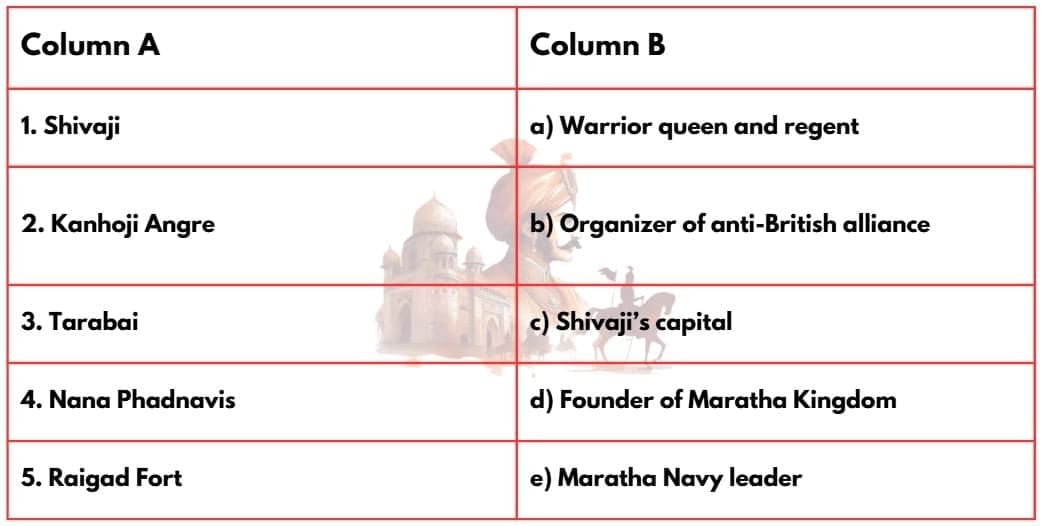
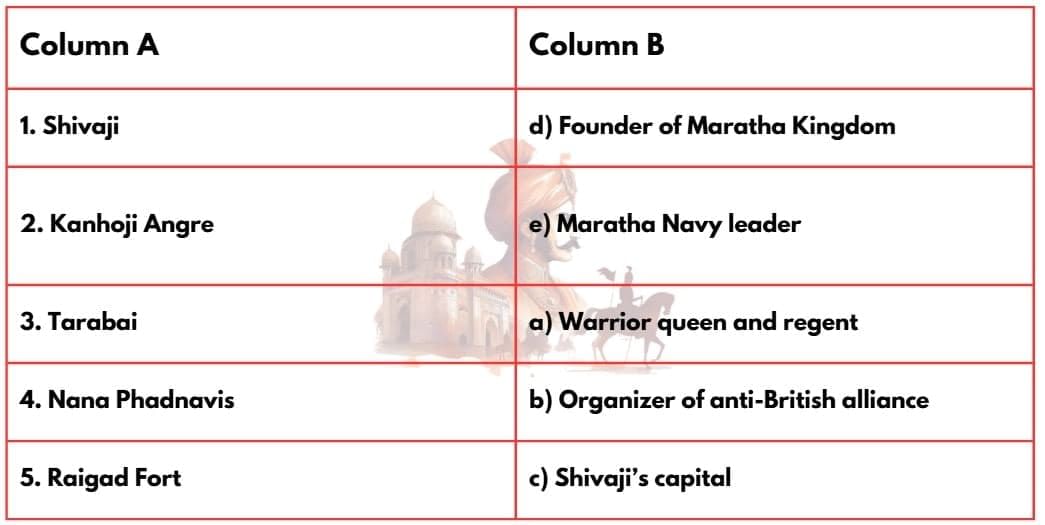
Match the Following 

Ans:

True or False

Q1. Shivaji abolished hereditary posts and paid officials salaries.
Ans: True

He introduced salaries to reduce hereditary power and increase loyalty.

Q2. The Maratha army included only infantry and cavalry, no navy.
Ans: False

Shivaji built a strong navy to defend the coastal region.

Q3. Chauth was a tax levied only on territories directly ruled by Marathas.
Ans: False

Chauth was collected from territories they protected but did not directly govern.

Q4. Ahilyabai Holkar was known for charitable works and temple restoration.
Ans: True

She rebuilt key temples and supported public welfare.

Q5. The Marathas had modern ships that matched European technology.
Ans: False

Their ships were less advanced, but clever tactics gave them an advantage.

Q6. Trade and infrastructure development were supported under Maratha rule.
Ans: True

The Marathas promoted trade and built roads, bridges, and ferry networks.

Fill in the Blanks

Q1. The Maratha movement for self-rule is called ________.
Ans: Swarajya

Q2. Shivaji’s council of eight ministers was called ________.
Ans: Ashta Pradhana Mandala

Q3. The tax called ‘chauth’ amounted to ________ percent of revenue.
Ans: 25

Q4. The famous Maratha naval commander was ________.
Ans: Kanhoji Angre

Q5. The fort at which Shivaji was crowned is called ________.
Ans: Raigad

Q6. The script used for Maratha official correspondence was called ________.
Ans: Modi

Q7. The leader credited with uniting Indian powers against the British was ________.
Ans: Nana Phadnavis

Very Short Question Answers

Q1. Who was Shivaji and why is he important?
Ans: Shivaji was the founder of the Maratha kingdom, celebrated for establishing Swarajya and pioneering guerrilla warfare.

Q2. What was guerrilla warfare used by the Marathas?
Ans: A tactic using swift surprise attacks and mobility to defeat stronger enemies.

Q3. What was the ‘chauth’ tax?
Ans: A 25% tax imposed on territories protected by the Marathas.

Q4. How did the Marathas challenge European naval power?
Ans: Through their navy led by Kanhoji Angre, who used tactical advantages on the coastline.

Q5. Name two cultural contributions of the Marathas.
Ans: Revival of Marathi and Sanskrit literature and rebuilding of Hindu temples.

Q6. Who was Tarabai and what was her role?
Ans: A warrior queen who led the Maratha resistance after the death of Rajaram.

Q7. Describe the Maratha administrative system under Shivaji.
Ans: A centralized system with salaried officials and regular transfers to prevent accumulation of power.

Q8. What was Nana Phadnavis known for?
Ans: Organizing a pan-Indian alliance to resist British expansion.

Q9. How did Marathas support trade and infrastructure?
Ans: By maintaining roads, bridges, ferry networks, and facilitating maritime trade.

Q10. How did forts help the Marathas?
Ans: Forts controlled strategic routes, acted as defense points, and ensured state resilience during conflicts.

Sunday, November 23, 2025

NCERT Class 8 Social Science Chapter 2 Reshaping India's Polotical Map

NCERT Class 8 Social Science 

Chapter 2 Reshaping India's Polotical Map

Page No. 26

Q1: How did foreign invasions and the rise of new dynasties reshape India’s political boundaries during this period? 

Ans: Foreign invasions and new dynasties changed India’s political map between the 11th and 17th centuries. Turkic-Afghan invasions led to the Delhi Sultanate, which united parts of North India. Babur’s victory at Panipat in 1526 started the Mughal Empire, which ruled most of India. In the south, the Vijayanagara and Bahmani kingdoms became strong, while the Ahoms in the northeast and Rajputs in Rajasthan kept their independence. Later, Timur’s invasion weakened Delhi, and under Akbar and Aurangzeb the Mughals reached their largest size. These events kept India’s boundaries changing for many centuries.

Q2: How did Indian society respond to invasions? How did India’s economy adapt during times of political instability? 
Ans: Indian society showed courage and unity during invasions. The Vijayanagara kings, the Ahoms, and Rajputs bravely resisted foreign rulers, while the Sikh Khalsa stood for justice and freedom.
Despite wars, the economy remained strong. Farmers grew crops using good irrigation, and trade continued through ports like Calicut and Surat. Merchants used the hundi system to send money safely. Temples and artisans supported local business. So, though rulers changed often, the people kept the economy running.


Q3: What impact did this period have on the lives of the people?
Ans: People faced both hardship and progress. Heavy taxes and wars made peasants poor, yet trade and craftwork brought wealth to cities. Culturally, this age saw great achievements—temples of Vijayanagara and Mughal buildings like the Taj Mahal. Leaders such as Rani Durgavati, Maharana Pratap, and Guru Tegh Bahadur became symbols of courage. Even in hard times, villages and communities stayed united.

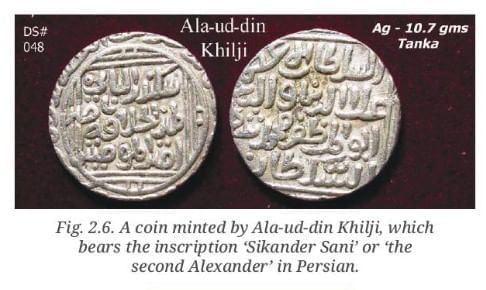
Q1: Looking at Fig. 2.6, why do you think Ala-ud-din Khilji called himself ‘the second Alexander’?

Ans: Ala-ud-din Khilji called himself “the second Alexander” to show his ambition and bravery. He wanted to be known as a great conqueror like Alexander the Great. His title showed pride in his victories and his wish to rule a vast empire.

Q2: What kind of resources do you think were needed to maintain an army and wage war in those days? Discuss in groups the various types of expenditure involved, from weapons or food for soldiers to animals used in warfare, road construction, etc.
Ans:
 Maintaining an army in ancient times required various essential resources:

  • Weapons: Swords, bows, and later, gunpowder artillery were crucial for combat.
  • Food Supplies: Soldiers and animals needed a consistent supply of food, including grain and other provisions.
  • Animals: Horses, elephants, and camels were vital for transport and warfare.
  • Infrastructure: Good roads and bridges were necessary for the quick movement of armies.
  • Financing: Funding came from taxes imposed on the populace and plunder from military campaigns, which covered soldiers' salaries, equipment, and fortifications.
  • Artisans: Skilled craftsmen were needed to produce weapons, while labourers supported logistics and construction.

Q1: Why do we use the term ‘image’ rather than common terms like ‘idol’ or ‘icon’? The latter two terms are considered pejorative in the context of Judaism, Christianity and Islam, whose orthodox sects condemn ‘idolatry’ or the worship of ‘idols’ or ‘icons’.
India’s classical texts used words like murti, vigraha, pratima, rupa, etc., to designate images, often statues, used for worship in temples or homes. In English, ‘image’ is a neutral term.
Ans:
 We use the word image because idol or icon is considered negative in some religions  like Christianity and Islam, which oppose idol worship. Indian texts use neutral words like murti or pratima, so image is a respectful and neutral term in English.

Q2: During the time of the Tughlaqs, the Musunuri Nayakas, Telugu chieftains, rallied over 75 more chieftains of the region, formed a confederacy that defeated smaller provinces, formed a confederacy that defeated the Delhi Sultanate forces, and expelled Muhammad bin Tughlaq’s army from Warangal (present-day Telangana) around 1330-1336. Do you think it would have been an easy task to bring together 75 leaders in those days?
Ans:
 No, it was very difficult. Communication was slow, and many chiefs had their own rivalries. The success of the Musunuri Nayakas shows their strong leadership, planning, and shared goal of freeing their land from the Delhi Sultanate.

Q3: Why do you think such locations were chosen for many of the medieval forts? Discuss pros and cons. (Hint: think of issues of strategy, security, vulnerability, etc.)
Ans: 
Medieval forts, such as Kumbhalgarh, were strategically located in areas like the Aravalli hills for several key reasons:

  • The elevated terrain provided a strong defensive advantage.
  • Higher ground allowed for better surveillance of approaching enemies.
  • Surrounding forests offered essential materials.
  • The steep slopes made it difficult for enemies to attack.

However, these locations also had drawbacks:

  • Being remote made it hard to receive quick reinforcements.
  • The difficult terrain complicated logistics for supplies and construction.

Q3: Have you noticed the term pati in titles like ‘Gajapati’? Pati means ‘lord’ or ‘master’ and was commonly used by many ruling dynasties of this period to signify power and stature. The Vijayanagara kings were called ‘Narapati", the Bahmani Sultanate rulers ‘Ashwapati’, and the Maratha rulers ‘Chhatrapati’ – each title reflecting different aspects of kingship and power. Can you guess what these three terms might mean?
Ans: 
The term pati in royal titles signifies various aspects of kingship and authority:

  • Narapati: Used by the Vijayanagara rulers, meaning "lord of men", highlighting their dominion over people.
  • Ashwapati: Title for Bahmani Sultanate rulers, translating to "lord of horses", which emphasised their cavalry strength.
  • Chhatrapati: Used by Maratha rulers, meaning "supreme sovereign", indicating their highest authority.

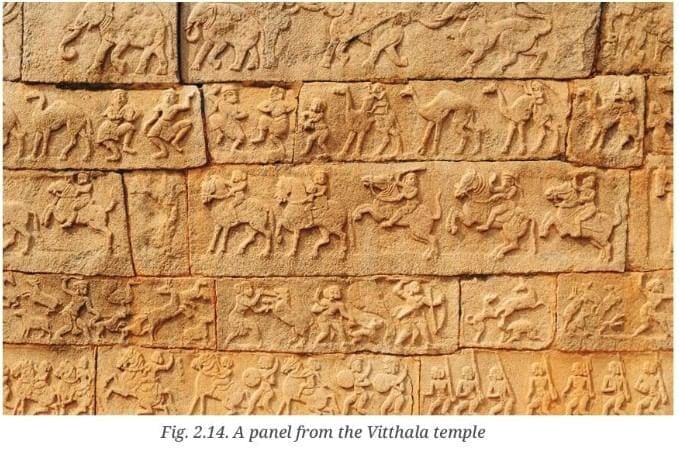
Q4: In Fig. 2.14, what elements do you observe? What do they tell you about life then? (Hint: observe the weapons, the animals, the activities.) 

Ans: In above figure from the Vitthala temple depicts several significant elements:

  • Weapons: Swords, spears, and shields suggest a society that prioritised warfare.
  • Animals: Horses are prominently featured, indicating their vital role in transport and combat.
  • Activities: Battle scenes illustrate a culture deeply engaged in conflict.

These elements reflect a vibrant, conflict-driven culture where warfare and the use of animals were integral to daily life.

Q4: What strikes you in Babur’s impressions of India? Discuss in groups.
Ans: 
Babur’s impressions of India show that he felt out of place in a new land. He missed the cooler climate and culture of Central Asia but was struck by India’s rich resources including masses of gold and silver, busy markets, and skilled craftspeople. Although he criticised some things, like the unfamiliar food and lifestyle, he also noticed the land’s beauty and wealth. His views reflect both his homesickness and his eye for India’s strengths.

Q5: Why do you think Akbar employed different strategies to expand his empire, while the earlier rulers of Delhi relied mostly on military might?
Ans: 
Akbar used various strategies to expand his empire, focusing on methods beyond mere military force. His approach included:

  • Diplomacy: He engaged in negotiations and alliances to strengthen his position.
  • Marriage Alliances: By marrying into local royal families, he built ties with important regional powers.
  • Sulh-i-kul: This principle of religious tolerance helped him gain the loyalty of diverse groups, including the Rajputs.

In contrast, earlier Delhi sultans primarily relied on military might, which often resulted in instability and rebellion. Akbar's strategies created a more stable and united empire.

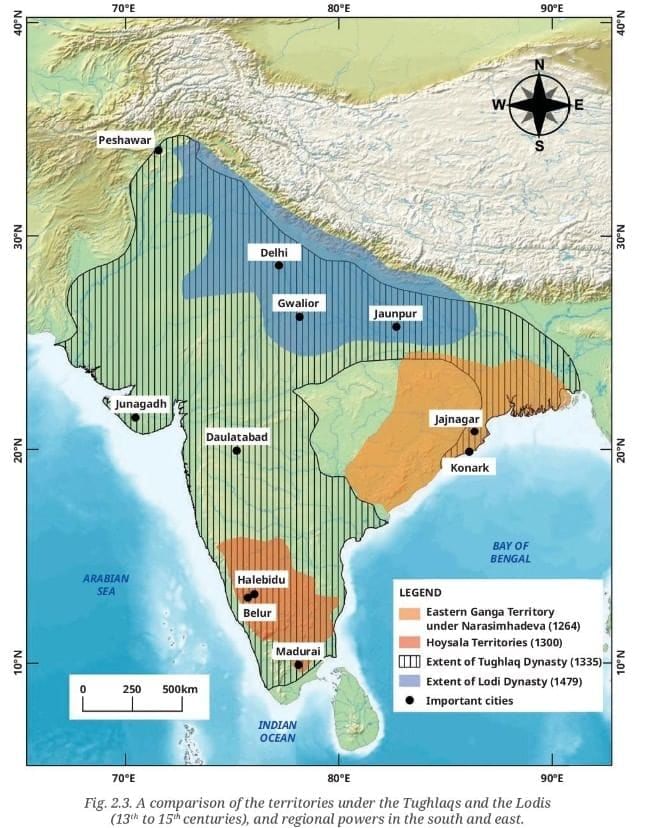
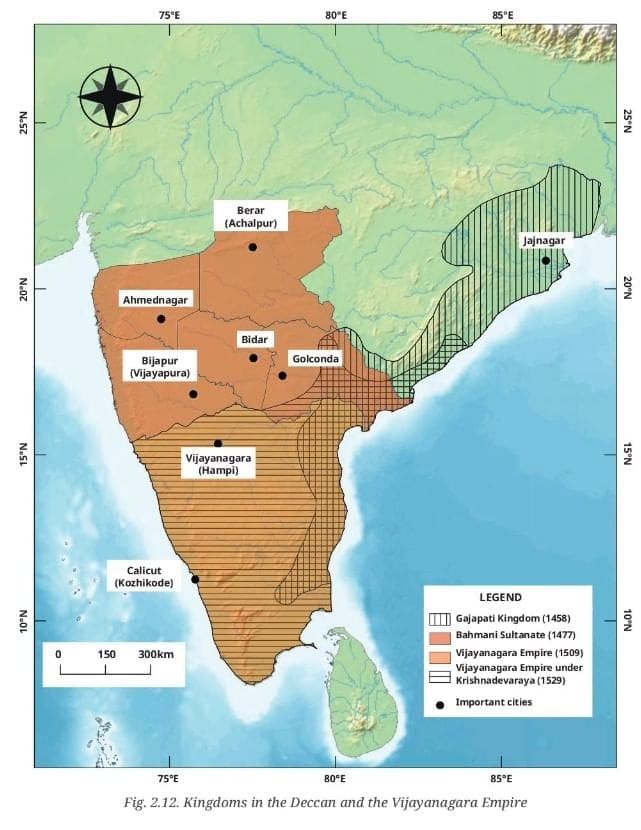
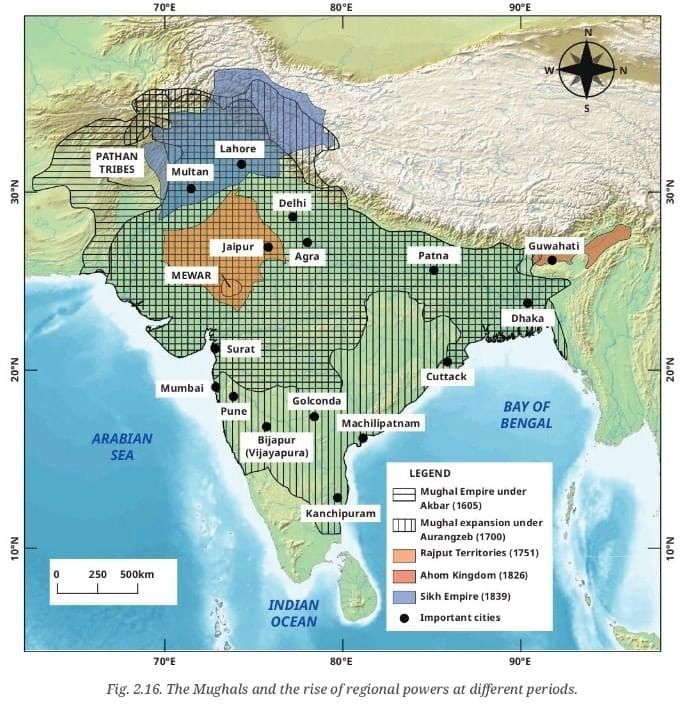
Q5: Compare the maps in Figs. 2.3, 2.12 and 2.16. What differences do you notice? What is the ‘reshaping’ that has occurred?

Ans: The maps show clear differences over time. Fig. 2.3 displays the Delhi Sultanate’s control mainly over northern India between the 13th and 15th centuries, while southern and eastern regions remained under independent kingdoms like the Hoysalas and Eastern Gangas. Fig. 2.12 illustrates the rise of the Vijayanagara Empire dominating the south, the Bahmani Sultanate ruling the Deccan, and the Gajapati kingdom in the east, reflecting a period of regional fragmentation.

Fig. 2.16 shows the Mughal Empire expanding to cover most of India during the reigns of Akbar and Aurangzeb, although some regional powers such as the Sikhs in northwestern tip and the Rajputs continued to resist. The reshaping that occurred involved a shift from the Delhi Sultanate’s mainly northern focus, to the emergence of strong southern and eastern powers like Vijayanagara and the Gajapatis, followed by the near-unification of India under the Mughals, influenced by invasions, regional resistance, and the rise of new dynasties.

Q6: We saw above that Delhi sultans’ average reign lasted about nine years. This figure becomes 27 years in the case of Mughal emperors up to Aurangzeb; and 16 years if we consider all Mughal rulers, up to the end of the empire in the 19th century. What do you make of these numbers of years of reign?
Ans:
  The average reign of the Delhi sultans was about nine years, indicating significant political instability and frequent violent successions. In contrast, the Mughal emperors ruled for an average of 27 years up to Aurangzeb, suggesting better administration and stronger alliances. However, when considering all Mughal rulers, the average reign drops to 16 years. This decline reflects the weakening and instability of the empire over time.

Q6: In his last letters to two of his sons, Aurangzeb wrote, “I came alone and am going away alone. I know not who I am and what I have been doing. … I have not done well for the country and the people, and of the future there is no hope. I was helpless [in life] and I am departing helpless.” What do these words tell us about Aurangzeb? How do you feel about them?
Ans: 
Aurangzeb’s- letters reveal regret as he imprisoned his father, killed his brothers for the throne and killed several thousands of people during his brutal rule. During his last years, all wrong doings done by him including mass destruction of schools, temples, cities and loots must have reflected to him, that’s why he mentioned that he had NOT done well for the country and the people. Besides his regret, letters also reflects his loneliness during his last days of life and negative impact on. society at that time due to his atrocious rule and policies.

Q7: Discuss in class how the paik system affected the daily lives of the people in the Ahom kingdom, both in terms of challenges and benefits, and helped the king manage both the army and the economy.
Ans:
 The paik system significantly influenced the daily lives of people in the Ahom kingdom, presenting both challenges and benefits:

  • The system granted every able-bodied man land rights in exchange for labour or military service.
  • This arrangement provided economic stability and ensured a ready workforce for the king.
  • It reduced costs by eliminating the need for a permanent army.
  • However, mandatory service disrupted daily life, placing pressure on families.
  • Despite these challenges, the system facilitated the construction of vital infrastructure, such as roads and canals.
  • It also enabled the maintenance of a strong military, exemplified by the Battle of Saraighat in 1671.
  • Overall, the paik system enhanced the efficiency of both the economy and military.

Q8: How did the Ahoms use the rivers, hills, and forests of Assam to their advantage? Can you think of ways in which the geography helped them build defences and fight wars?
Ans:
 The Ahoms effectively utilised the geography of Assam, including its dense forestshills, and the Brahmaputra River, to their advantage in warfare. Their strategies included:

  • Employing guerrilla tactics and ambushes, particularly evident during the Battle of Saraighat in 1671.
  • Using the natural landscape as barriers and hiding spots for their troops.
  • Utilising river routes for defensive strategies, complicating enemy navigation and supply lines.

This geographical knowledge allowed the Ahoms to effectively defend their territory and maintain their independence against larger forces.

Q7: Why do you think Guru Tegh Bahadur endured torture rather than convert? Why did he think his sacrifice would make a difference? 
Ans:
 Guru Tegh Bahadur endured torture to:

  • Uphold religious freedom for all, particularly the Kashmiri Pandits.
  • Demonstrate courage in the face of oppression.
  • Inspire others to resist Mughal tyranny.

He believed that his martyrdom would serve as a powerful example, encouraging others to stand up for their beliefs and fight against injustice.

Q8: What values did the Sikh Gurus and the Khalsa embody?
Ans: 
The Sikh Gurus and the Khalsa embodied several core values:

  • Courage: They demonstrated bravery in the face of oppression.
  • Justice: They fought for fairness and equality for all.
  • Equality: They promoted the idea that everyone is equal, regardless of background.
  • Selfless service: They encouraged helping others without expecting anything in return.

Additionally, they stood up for religious freedom and defended the weak, fostering unity and moral strength among their followers.

Q9: How are they relevant in today’s world?
Ans:
 These values are important today because they teach us to treat everyone fairly, respect differences, and help others, which helps build a better and peaceful world.

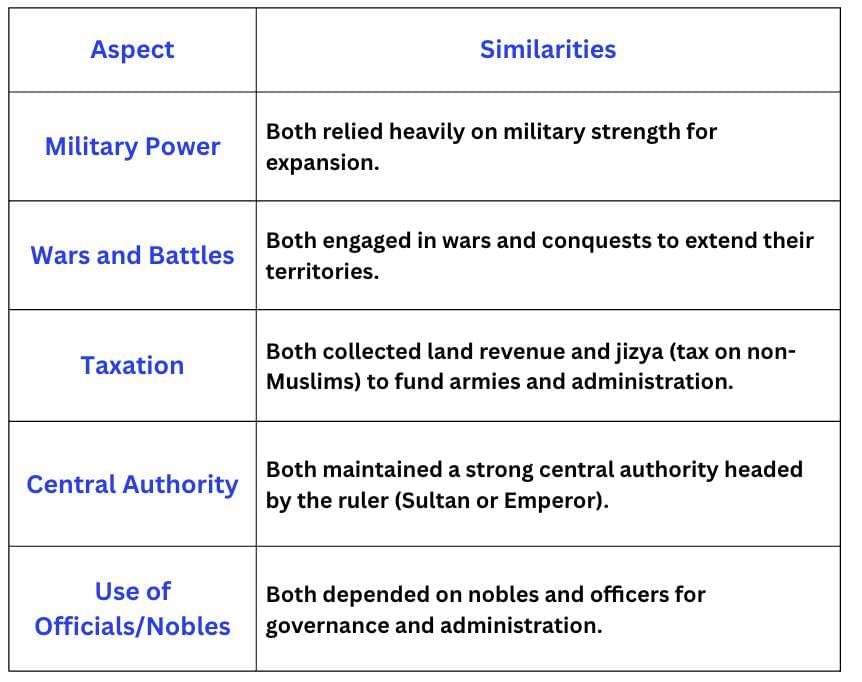
Q1: Compare the political strategies of the Delhi Sultanate and the Mughals. What similarities and differences existed between them?
Ans: Similarities between the Delhi Sultanate and the Mughal Empire political strategies are: 

Differences between the Delhi Sultanate and the Mughal Empire political strategies are: 

In summary, while both empires depended on war and taxes, the Mughals had a more organised and enduring governance structure.

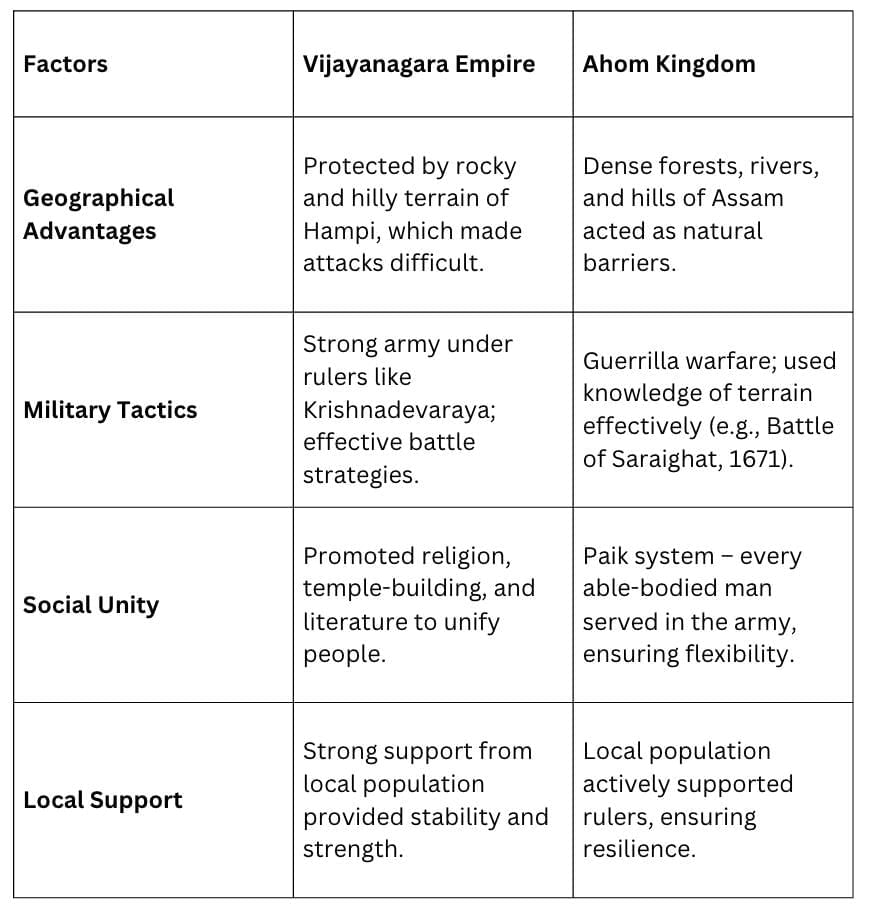
Q2: Why did kingdoms like the Vijayanagara Empire and the Ahom Kingdom manage to resist conquest for a longer time compared to others? What geographical, military, and social factors contributed to their success?

Ans: Kingdoms like the Vijayanagara Empire and the Ahom Kingdom successfully resisted conquest for a longer time due to several key factors:

Q3: Imagine you are a scholar in the court of Akbar or Krishnadevaraya. Write a letter to a friend describing the politics, trade, culture, and society you are witnessing.

Ans

Dear Friend,

I hope you are well. I want to share with you about life here in Vijayanagara under our great king, Krishnadevaraya. The empire is very strong and powerful, ruling much of the Deccan. The king is not only a brave leader but also a supporter of arts and learning. He encourages poets and scholars, and he even wrote a famous poem himself. Our city is full of beautiful temples, palaces, gardens, and busy markets. It is said to be as large and lovely as Rome. Many traders come from different places to buy and sell goods here.

Life in the city is full of energy and wealth. But after Krishnadevaraya passed away in 1529, things have become difficult. In 1565, a group of enemies fought against us and defeated our army in the Battle of Talikota. They destroyed many parts of our city, including temples and homes, and this has made life hard for many people. Now the empire is breaking into smaller parts, ruled by local leaders called Nayakas. Still, the memoiy of Krishnadevaraya’s rule and the glory of Vijayanagara remain strong in our hearts.

Yours sincerely,

(Scholar’s name)

Q4: How come Akbar, a ruthless conqueror in his young days, grew tolerant and benevolent after some years? What could have led to such a change?

Ans: When Akbar became emperor at the young age of 13, he was initially a fierce and ruthless leader focused on conquest and military power. His early reign was marked by brutality, such as during the long siege of Chittor, where many lives were lost and survivors faced harsh treatment. Over time, Akbar's attitude began to change due to several factors:

  • His interactions with people of different faiths and cultures.
  • Marriage alliances with Rajput princesses, which fostered political and social ties.
  • The influence of scholars and advisors in his court, who encouraged a more inclusive approach.

Akbar abolished the jizya tax on non-Muslims and promoted sulh-i-kul (peace with all), encouraging religious tolerance and harmony. He realised that ruling with respect and cooperation brought more stability and unity than fear. According to his historian Abul Fazl, Akbar admitted that forcing conversions was wrong and ineffective. Over time, he changed from a harsh conqueror into a wise and benevolent ruler who valued peace and diversity.

Q5: What might have happened if the Vijayanagara Empire had won the Battle of Talikota? Imagine and describe how it could have changed the political and cultural history of south India.
Ans: If the Vijayanagara Empire had won the Battle of Talikota in 1565, South India's history could have changed significantly. Here are some potential outcomes:

  • The Vijayanagara empire could have stayed strong and united instead of breaking into smaller kingdoms.

  • They might have stopped invasions from the Deccan Sultanates and even stood against the Mughals, changing India’s power balance.

  • Art, literature, and temple architecture could have grown even more, with famous poets and scholars enriching South India’s culture.

  • Cities like Vijayanagara could have become bigger trade and cultural centres, bringing more wealth and people.

  • South India might have remained a powerful and influential region for centuries, shaping its identity and heritage strongly.

Q6: Many values promoted by early Sikhism, including equality, seva, and justice, remain relevant today. Select one of these values and discuss how it remains relevant in contemporary society.
Ans:  The value of equality, taught by Guru Nanak, is very important even today. He said all people are equal before God (Ik Onkar), rejecting caste and religious discrimination. Later Gurus, like Guru Tegh Bahadur, also defended others’ right to practise their faith freely. In today’s world, equality helps us respect everyone, treat all fairly, and live together peacefully in schools, workplaces, and society.


Q7: Imagine you are a trader in a port city (Surat, Calicut, or Hooghly). Describe the scenes you see as regards goods, people you trade with, movement of ships, etc.
Ans: As a trader in Surat, I see a busy and wealthy port. Ships from Arabia, Persia, and Africa bring silk, horses, and metals, while we export cotton textiles, spices, and jewellery. Labourers unload cargo, and merchants crowd the lively markets. The hundi system makes money transfer safe. People of many regions live and trade here peacefully, making Surat a rich and vibrant centre of commerce.